Flyscreen mesh types compared: which one to choose
Fibreglass, aluminium, stainless steel, pet, midge, one-way and solar flyscreen mesh compared on strength, view, price per metre and where each suits.
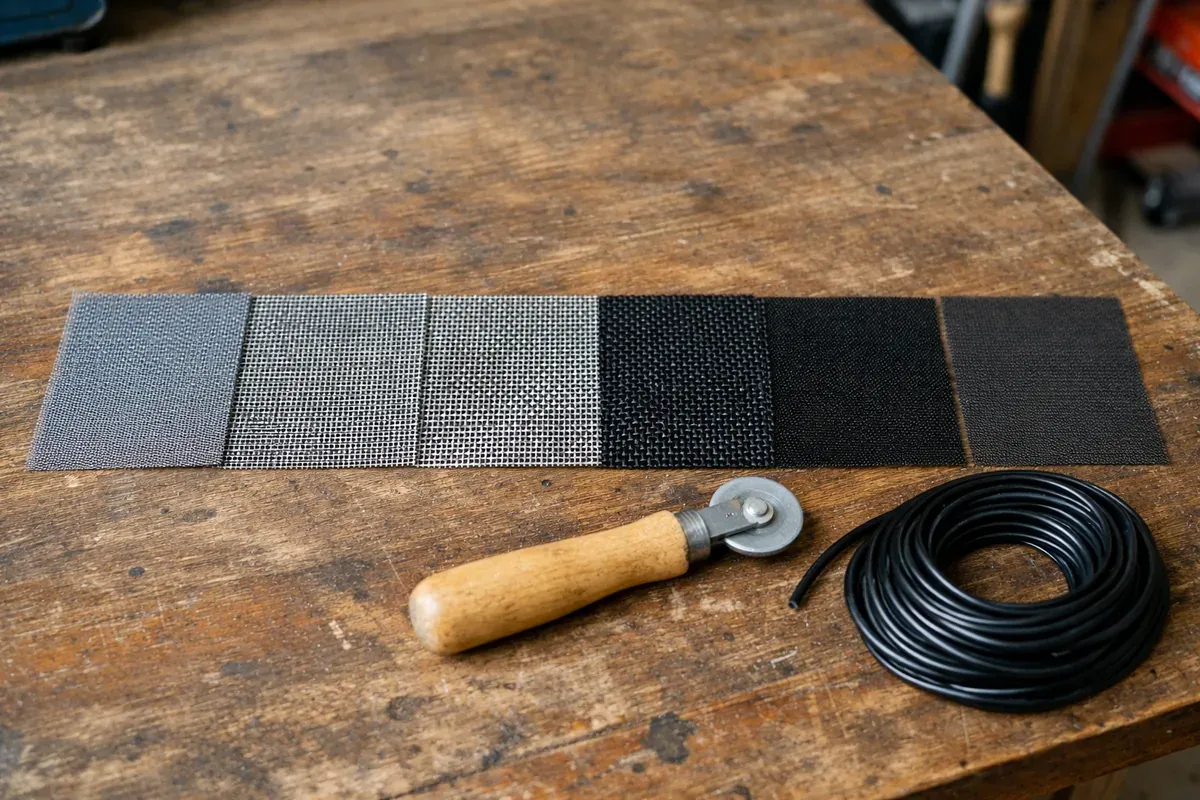
For most windows, plain fibreglass flyscreen mesh is the right choice: it costs about $2 to $8 a metre at Bunnings, doesn’t rust and is the easiest to fit. Pick aluminium for stiffer screens that won’t sag, 316 stainless steel near the surf or in bushfire areas, pet mesh where claws are a problem and midge (fine) mesh where sandflies and midges get through standard mesh.
One-way and solar meshes are specialist products for privacy and heat, usually ordered through a screen business rather than bought off the shelf.
Flyscreen mesh types side by side
Prices are per linear metre of roll, worked out from Bunnings Australia listings checked in November 2026 (roll price divided by roll length, 910 mm and 1220 mm widths). Short 2 m packs usually cost more per metre than longer rolls. Treat them as indicative: retail prices change often.
| Mesh | Durability | View and airflow | About per metre | Best for |
|---|---|---|---|---|
| Fibreglass | Doesn’t rust or corrode, but stretches and tears more easily | Good | $2 to $8 | Most windows, renters, budget remeshing |
| Aluminium | Stiff, won’t sag; dents and creases if hit | Good (black coating helps the view) | $11 to $15 | Sliding doors, busy areas; Cyclone’s is listed as BAL-29 rated |
| Stainless steel (316 or fine-wire) | Strongest of the standard meshes, resists corrosion | Very good, especially fine-wire types | $17 to $31 | Coastal homes, high traffic; Cyclone’s are listed as BAL-40 rated |
| Pet mesh (polyester) | Heavy, tear resistant, sold as 6 times stronger than fibreglass | Darker, less see-through | $15 to $17.50 | Doors and low windows with dogs and cats |
| Midge or fine mesh | Similar to standard synthetic mesh | Slightly darker | $11 to $13 | Sandfly, midge and thrip areas, near water |
| One-way (privacy) | Usually aluminium | See out, hard to see in, in daylight only | Quote from a screen business | Street-facing windows |
| Solar or sun-control | Synthetic | Darker; cuts heat and glare | Quote from a screen business | Hot west-facing windows, verandas |
Sources: Bunnings fly screen range and Bunnings speciality fly screens. The strength and visibility claims for each product are the maker’s, not independent test results.
Fibreglass mesh
Fibreglass is the standard grey or charcoal mesh in most Australian flyscreens. It is soft, so it is forgiving to roll into the spline channel and easy to trim with a sharp knife. That makes it the usual pick if you’re replacing flyscreen mesh yourself for the first time.
The trade-off is strength. It stretches and tears more easily than metal mesh, so it suits windows more than doors that kids and dogs push through. It also isn’t an option where the bushfire standard applies (see below).
Bunnings also sells “Pureview”, a synthetic mesh the maker says gives a 15% clearer view and twice the lifespan of traditional fibreglass. It costs more per metre than plain fibreglass but less than aluminium.
Aluminium flyscreen mesh
Aluminium mesh is stiffer than fibreglass, so it holds its shape on wide sliding doors and won’t sag over time. Cyclone’s version at Bunnings has a black coating to make it easier to see through, and is listed as meeting BAL-29 under AS 3959-2018.
Its weak spot is denting. A knock from a ball or a shoulder leaves a crease that won’t pull out. It also takes more care to fit: the edges are sharp, so wear gloves when cutting and handling it.
Stainless steel fly screen mesh
Stainless steel is the toughest common mesh. Bunnings stocks two kinds: a 316 marine-grade stainless and Primeview, an ultra-fine stainless wire mesh the maker says is 35% clearer than its aluminium mesh. Both are listed as meeting BAL-40.
It costs roughly one and a half to two times as much as aluminium per metre, so most people save it for doors, coastal homes and bushfire areas. Like aluminium, the cut edges are sharp, so wear gloves.
Stainless flyscreen mesh is not the same as a security screen. Security doors use a much heavier mesh or perforated sheet in a stronger frame; flyscreen-grade stainless keeps out bugs, not burglars. See our guide to flyscreen doors for the difference.
Pet mesh
Pet mesh is a heavy-gauge polyester that resists claws from most dogs and cats. It is noticeably darker than fibreglass and lets less air through: one Australian trade supplier listed airflow of 44% for its pet mesh against 71% for its standard fibreglass. Bunnings sells it in 910 mm and 1220 mm wide 2 m packs.
It is worth the extra cost on screen doors and low windows where pets jump or scratch, and usually overkill on high windows. Our pet mesh guide covers costs and when it pays off.
Midge mesh (fine mesh) for sandflies
Standard mesh stops flies and mosquitoes, but midges and sandflies are small enough to get through. Midge mesh has a much tighter weave. Cyclone’s Miniweave, for example, is sold with an 18 x 30 aperture and a weave the maker says is 60% tighter than standard flyscreen, aimed at midges, sandflies and thrips.
A tighter weave can mean a slightly dimmer view, so it is worth using only where these insects are a real problem, usually near the beach or other water. It is not always on the shelf, so check stock at your local store.
One-way and solar mesh
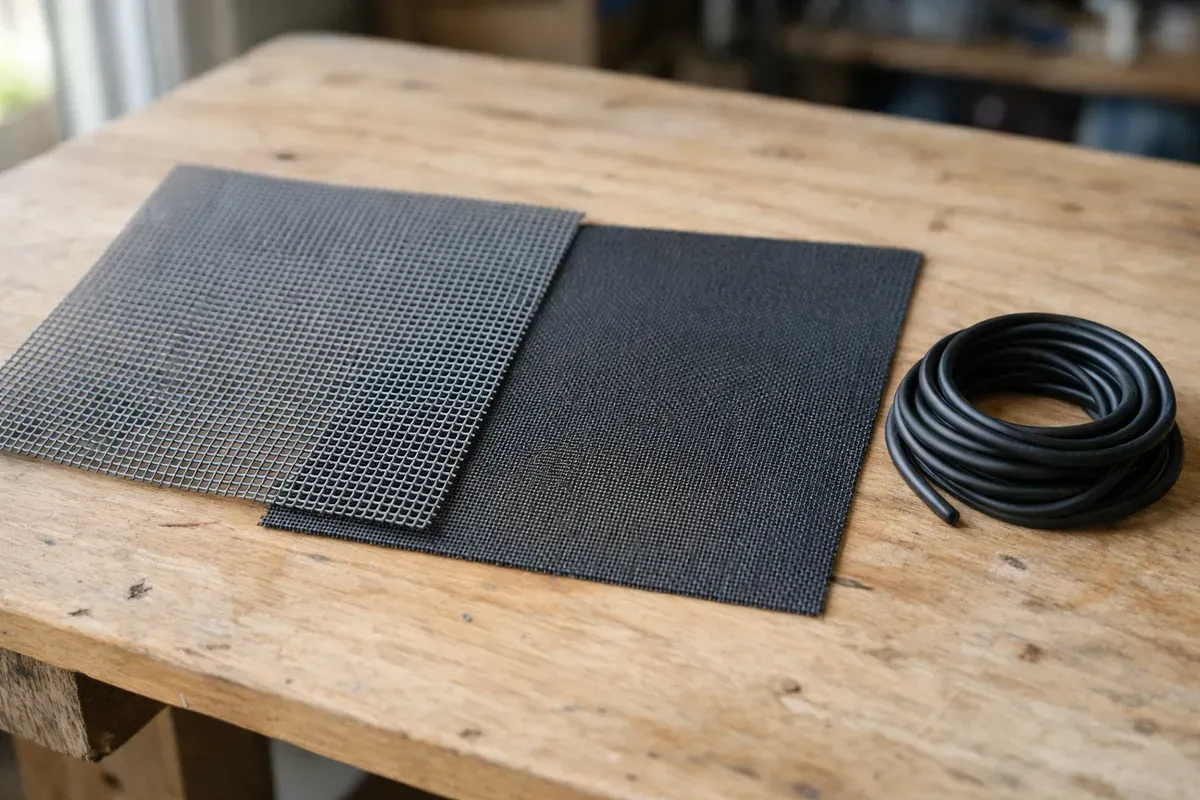
One-way mesh (sometimes called privacy or lookout mesh) lets you see out while making it hard for people outside to see in. It only works while it is brighter outside than inside. At night, with lights on indoors, the effect reverses, and suppliers say it is never fully one-way: you may still see a silhouette. Sunjan’s mesh page explains the lighting limits well.
Solar or sun-control mesh is a denser, darker mesh that absorbs and blocks some of the sun’s heat and glare before it reaches the glass, while still keeping insects out. It suits hot west-facing windows and verandas. The heat-blocking figure varies by product, so ask for the rating of the exact mesh you are quoted.
Neither type is a standard Bunnings line, so a screen business usually supplies and fits them. You can find a local screen business to quote.
Best mesh for coastal areas
Salt air is hard on metal. If you’re within a few kilometres of the surf, your choice is mainly between fibreglass (which doesn’t corrode) and 316 stainless steel.
A care sheet for 316 stainless mesh sold through Australian trade supplier Lincoln Sentry says that brown “tea staining” is most common within about 5 km of the surf, or a few hundred metres from sheltered coastal water, and gets worse the closer you are. It names 316 as the minimum grade, and recommends washing the mesh with warm soapy water: every 4 months between 1 and 10 km from the coast, monthly from 500 m to 1 km, and 2 to 4 times a month closer than that. It also warns against stainless touching dissimilar metals, and says aluminium frames should be powder coated. Read the care sheet (PDF).
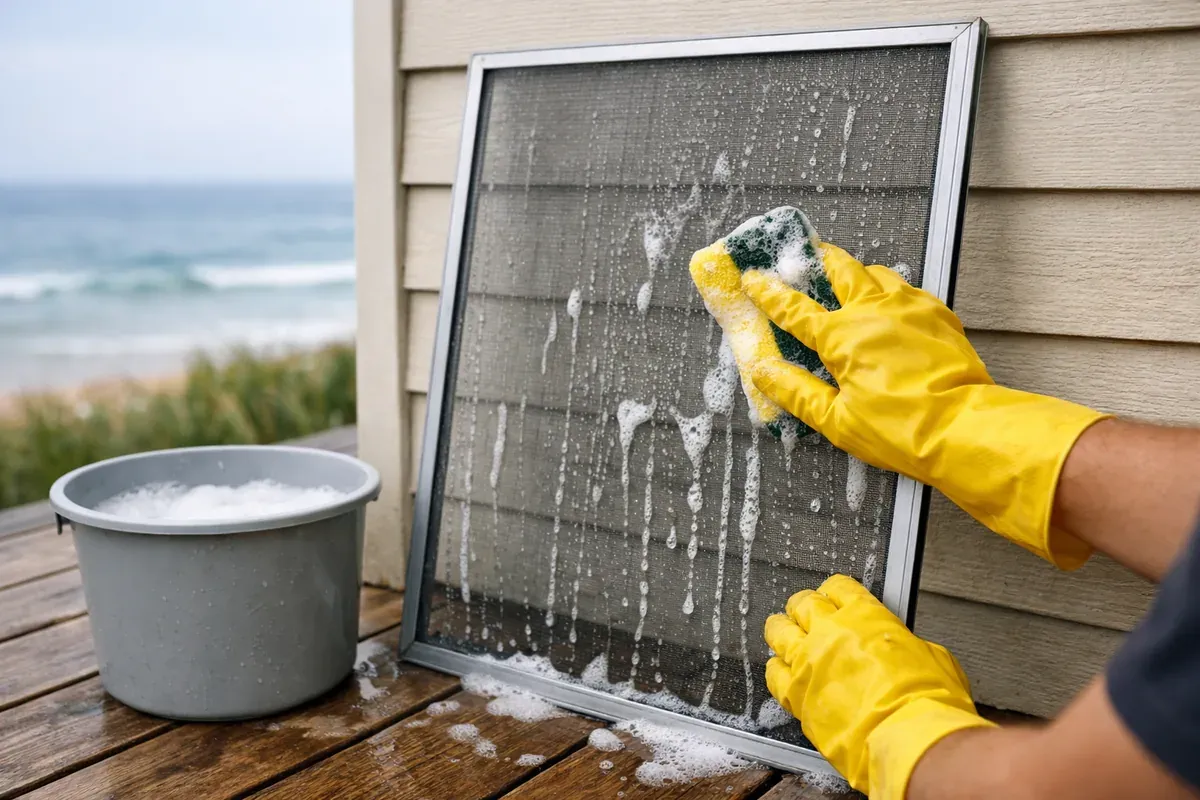
Tea staining is a surface mark, not a failure, but regular rinsing keeps any metal mesh looking better near the sea.
Flyscreens in bushfire-prone areas
If your home is on bushfire-prone land and has a bushfire attack level (BAL), the bushfire building standard AS 3959 sets requirements for any screens fitted to its windows and doors. They depend on the BAL rating and cover the mesh aperture and material, among other things. Your council or building certifier can tell you your BAL and what applies.
CSIRO’s bushfire guidance on windows and doors says openable windows should be protected with metal mesh with apertures under 2 mm, and to avoid plastic flyscreens because they melt in a fire. That points away from fibreglass, Pureview and pet mesh.
This is general information. Check with your council or certifier before buying, and keep the product’s BAL label or paperwork.
When to get someone in
Remeshing a standard window screen with fibreglass is a reasonable first DIY job. Get a screen business in when:
- the screens are on an upper floor and can only be reached from a ladder outside
- the frame is bent, the corners are cracked or the screen no longer fits the window
- you need a BAL-rated screen and paperwork for a certifier
- you want stainless, one-way or solar mesh fitted on large doors, where a crease or wrinkle is costly
Our cost calculator gives a rough price for remeshing or replacing, and the flyscreen repair cost guide explains what changes the price. When you’re ready, get a quote from a local screen business.
Questions
What is the best flyscreen mesh for most houses?
Fibreglass suits most windows. It is cheap, easy to fit and does not rust. Pay more for aluminium or stainless steel only where screens get knocked, you live near the surf or you need a bushfire rating.
Is aluminium or fibreglass flyscreen mesh better?
Aluminium is stiffer and won't stretch or sag, but it dents and creases. Fibreglass is softer and tears more easily, but costs far less per metre at Bunnings.
Will midge mesh stop sandflies?
Fine mesh such as Cyclone Miniweave is sold to keep out midges, sandflies and thrips, with a much tighter weave than standard flyscreen. A tighter weave can mean a slightly darker view, so use it where those insects are a real problem.
Can I use fibreglass flyscreen in a bushfire area?
Usually not. The bushfire building standard AS 3959 sets requirements for screens by BAL rating, including mesh aperture and material, and CSIRO advises avoiding plastic flyscreens because they melt in a fire. Check with your council or building certifier.
Does pet mesh stop dogs and cats getting through?
It resists claws far better than fibreglass, but it is not a security screen, and it is darker to look through than standard mesh.