Flyscreen spline sizes: how to pick the right one
The flyscreen spline sizes sold in Australia, foam versus PVC and ribbed, how to match spline to your frame and mesh, and how much to buy.
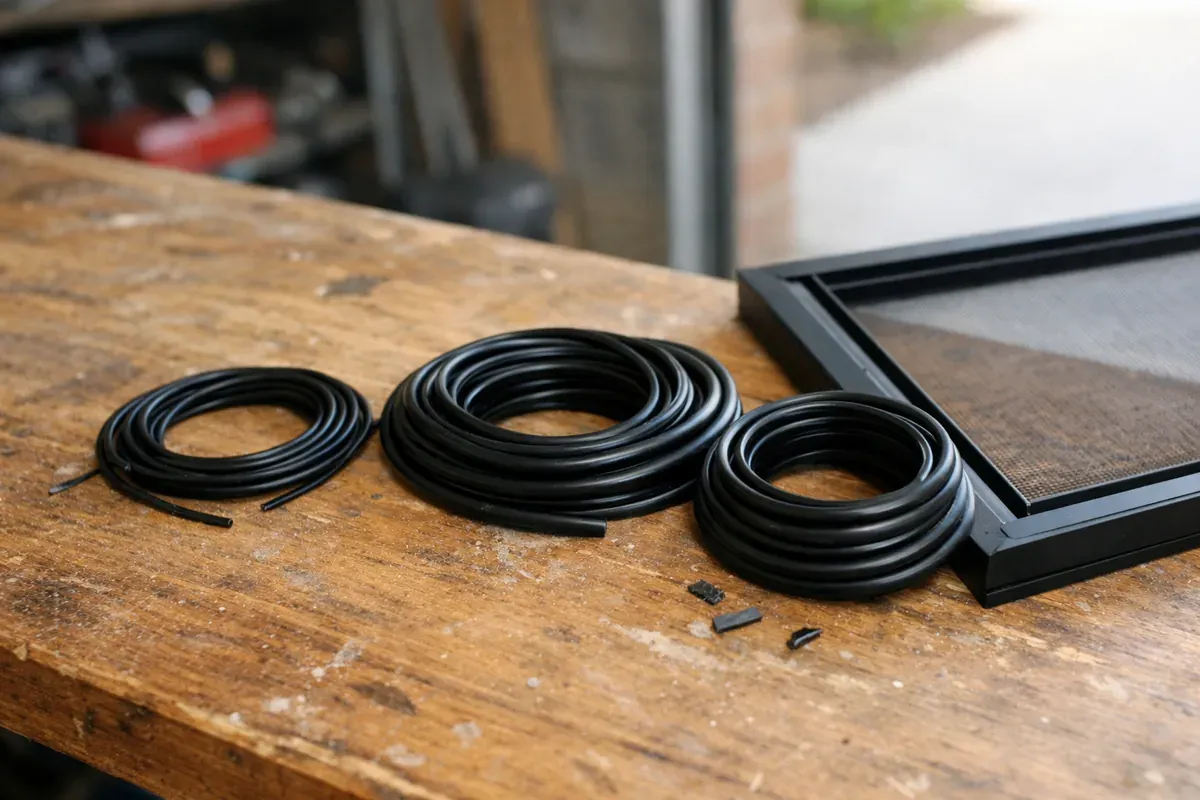
Flyscreen spline is the thin rubbery cord that gets rolled into a groove around the frame and locks the mesh in place. In Australian hardware stores it is mostly sold in 4.5mm, 5.0mm, 5.7mm and 6mm diameters, with trade suppliers also listing 4.0mm, 5.3mm and 6.3mm. The right size is the one that matches your old spline or your frame’s groove, adjusted for the mesh you are fitting.
Get it wrong and the mesh either pops out a week later or tears while you roll it in. Here is how to get it right first time.
What flyscreen spline does
The spline presses the mesh down into the channel (also called the groove or spline channel) that runs around the inside face of the frame. A spline roller pushes it in, and the spline’s own springiness holds the mesh tight against the channel walls.
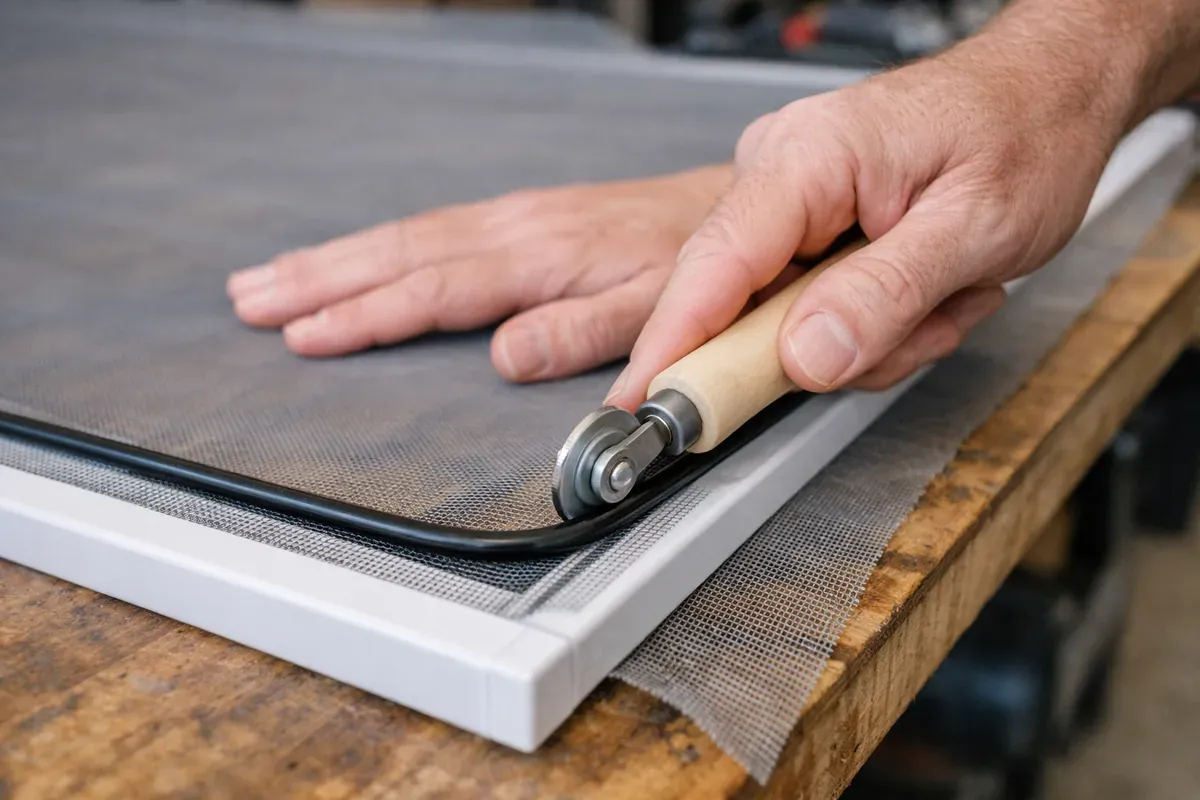
Because it is doing all the gripping, the fit matters more than the brand. Too thin and it cannot wedge the mesh. Too thick and it will not go in without a fight.
Spline sizes sold in Australia
These are the diameters on current Australian listings, checked November 2026. Hardware stores carry a few sizes in short packs and long rolls; trade screen suppliers carry more sizes, mostly in 100m to 300m rolls.
| Diameter | Type | Where it showed up | Usual pairing |
|---|---|---|---|
| 4.0mm | Ribbed PVC | Trade suppliers (stock varies) | Narrow channels, thick mesh in a standard channel |
| 4.5mm | PVC | Bunnings (Rolltrak), Mitre 10 (Cowdroy) | Aluminium and stainless steel mesh |
| 5.0mm | Foam, ribbed PVC | Bunnings (Cyclone foam), trade suppliers | Mid-size channels |
| 5.3mm | Foam, ribbed PVC | Trade suppliers | Between sizes |
| 5.7mm | Foam, ribbed PVC | Bunnings (Cyclone foam), Mitre 10 (Cowdroy foam), trade suppliers | Common fibreglass channels |
| 6.0mm | PVC, ribbed PVC | Bunnings (Rolltrak), Mitre 10 (Cowdroy), trade suppliers | Fibreglass mesh |
| 6.3mm | Foam | Trade supplier | Wide channels, worn grooves |
The “usual pairing” column follows the product listings, such as Bunnings’ note on its Rolltrak spline that 4.5mm suits aluminium and stainless steel while 6mm suits fibreglass. The same listing says most mesh will work with either, so treat it as a starting point, not a rule. Whether a store’s PVC spline is plain or ribbed depends on the brand, so check the pack.
If you are reading American instructions or watching an American video, you will see sizes in inches like .140 or .160. The spline chart from US mesh maker Phifer converts these: .125 is about 3.2mm, .140 about 3.6mm, .160 about 4.1mm, .175 about 4.4mm, .190 about 4.8mm, .210 about 5.3mm, .220 about 5.6mm and .250 about 6.4mm. Sizes under 4mm did not show up on the Australian retail and trade listings checked.
Foam, PVC and ribbed spline compared
You will see three kinds of spline in stores.
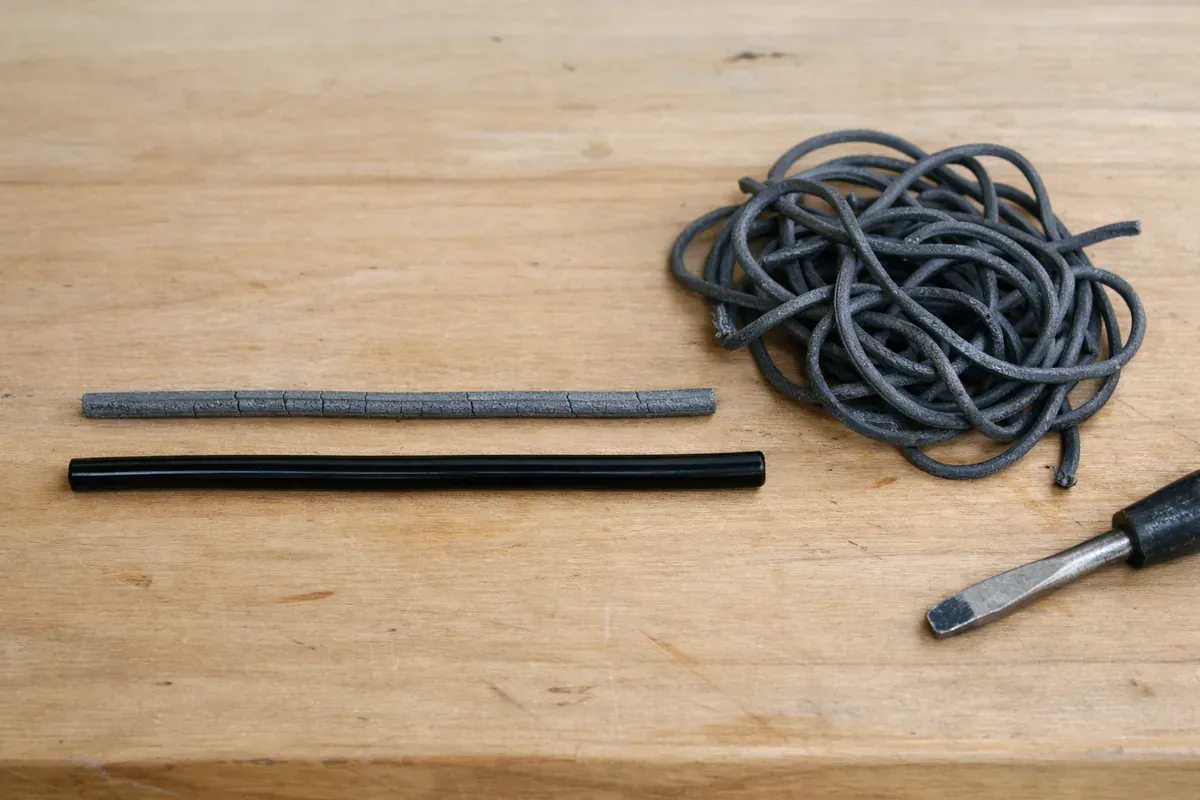
- Foam spline has a soft foam core. Cyclone describes its Pro foam spline as having high compression and shape memory, giving easier, faster installation and resisting shrinkage. Being soft, it is usually the most forgiving option for a first remesh.
- Plain PVC spline (sometimes sold as PVC rubber or hollow PVC) is firmer and takes more pressure to roll in.
- Ribbed PVC spline has ridges along its length and usually a hollow core. Trade supplier Lincoln Sentry’s listing for its Flypro ribbed spline (now marked discontinued) said the ribs give a firmer grip, allowing higher screen tension and more resistance to pulling out with heavy mesh.
The type matters less than the diameter. A foam spline in the right size beats a ribbed spline in the wrong one.
How to work out which size your frame needs
The most reliable guide is the spline already in your frame. Here is the order to check things in.
- Pull out a piece of the old spline. Lift one end with a flat screwdriver or the hook on a spline tool and pull out a length. Keep a 10cm piece to take to the shop.
- Measure its diameter. Use vernier callipers if you have them. If not, lay it on a steel rule and measure across, or compare it side by side with the packs in store. Do not squeeze it while you measure.
- Allow for age. Old spline goes hard and can flatten or shrink. If it looks squashed, measure the widest point and consider testing the next size up as well.
- Measure the channel if the spline is missing. Measure the width of the groove opening. Phifer’s guidance is that for standard fibreglass or aluminium mesh the spline should match the groove width.
- Test fit before you buy a big roll. Lay a scrap of your new mesh over the channel and roll a 15 to 20cm length of spline into it. It should go in with firm pressure, sit flush or just below the frame face, and hold when you tug the mesh.
If you are stuck between two sizes, buy a short pack of each. They are only a few dollars, and it saves a second trip.
How mesh thickness changes the choice
The spline and mesh fill the channel together, so a thicker mesh leaves less room for spline.
- Fibreglass is the thinnest and softest. It usually takes the full-size spline that matches the channel.
- Aluminium and stainless steel are stiffer and can split if the spline is too fat. That is why Bunnings pairs them with the thinner 4.5mm spline. If aluminium tears at the channel edge, try one size down.
- Pet mesh is much thicker and stiffer than standard fibreglass. Phifer, a US mesh maker, says its PetScreen and other heavy fabrics need one size smaller spline than the groove would normally take. That is one maker’s guidance; no Australian source we checked states the same rule, so test fit before you commit.
More on the mesh itself is in our guide to flyscreen mesh types, and pet mesh flyscreens covers whether pet mesh is worth it.
How much spline to buy
Add up the four sides of the frame and allow about half a metre extra for corners and offcuts. For example, a window screen 900mm by 1200mm has a perimeter of 4.2m (0.9 + 1.2 + 0.9 + 1.2), so you would want about 4.7m.
What that means at the shop:
- One or two windows: a 6.5m pack. Bunnings had the Cyclone 5.0mm foam spline in 6.5m for about $9 in November 2026.
- Several windows or a door: a 13m or 30m pack. The Cyclone 5.7mm foam spline in 30m was about $25 at Bunnings in November 2026.
- The whole house: a 100m roll. Rolltrak 100m rolls were about $31 (4.5mm) and $43 (6mm) at Bunnings in November 2026.
Prices are indicative and change often. A sliding screen door has a much longer perimeter than a window, so measure it rather than guessing. If you are doing the job for the first time, our step-by-step remeshing guide covers the rest of the shopping list, and the Bunnings flyscreens guide covers what hardware stores stock.
Signs you picked the wrong size
Spline too thin:
- It rolls in with almost no pressure.
- The mesh pulls free when you press on it or tug a corner.
- The spline lifts out of the channel by itself after a few days, often at the corners.
- The mesh sags soon after fitting.
Spline too thick:
- You have to lean hard on the roller and it keeps jumping out of the groove.
- Aluminium or stainless mesh splits along the channel edge.
- The spline sits proud of the frame face instead of down in the groove.
- A thin frame bows inward along the long sides.
If you see any of these, pull the spline out straight away, before you trim the mesh. Spare mesh around the edge gives you room to try again with the other size.
Take care with aluminium and stainless mesh: the cut edges are sharp, so wear gloves, and keep your other hand behind the blade when trimming.
When to get someone in
Spline is one of the easier DIY jobs, but a screen business is worth calling when:
- the channel itself is crushed, split or corroded, so no spline will hold
- the frame is bent or a corner joint has come apart
- the screen is on an upper floor and has to come out from outside
- it is a security screen door, which usually fixes its mesh differently; changing how the mesh is held may affect the standard it was tested to, so ask the manufacturer or installer first
You can find a local screen business, check typical prices with the cost calculator, or request a quote and we will pass your details to a local repairer.
Questions
What size spline do I need for a standard flyscreen?
There is no single standard. Match the spline to the old spline or the groove in your frame. As a starting point, Bunnings pairs 6mm spline with fibreglass mesh and 4.5mm with aluminium or stainless steel mesh.
Can I reuse the old spline?
You can if it is still soft and springy. If it has gone hard, cracked or shrunk, replace it, because it will not grip the new mesh properly and it is cheap to buy.
Does pet mesh need a different spline?
Often, yes. Pet mesh is much thicker than fibreglass, and US mesh maker Phifer advises one size smaller spline for its PetScreen. That is one maker's guidance, so test a short piece in your frame before you commit.
Is foam spline better than PVC spline?
Foam is softer and easier to roll in, which suits beginners and fibreglass. Suppliers say ribbed PVC grips harder, which helps with higher tension or heavier mesh. Either works if the diameter suits your groove.
How many metres of spline do I need?
Measure around the outside of the frame (add the four sides together) and add about half a metre for corners and mistakes. A 6.5m pack covers most single windows.