How to patch a flyscreen hole or tear
Fix a small hole or tear in a flyscreen without remeshing. Repair kits and tape, what they cost, how to make a patch last and when to remesh.
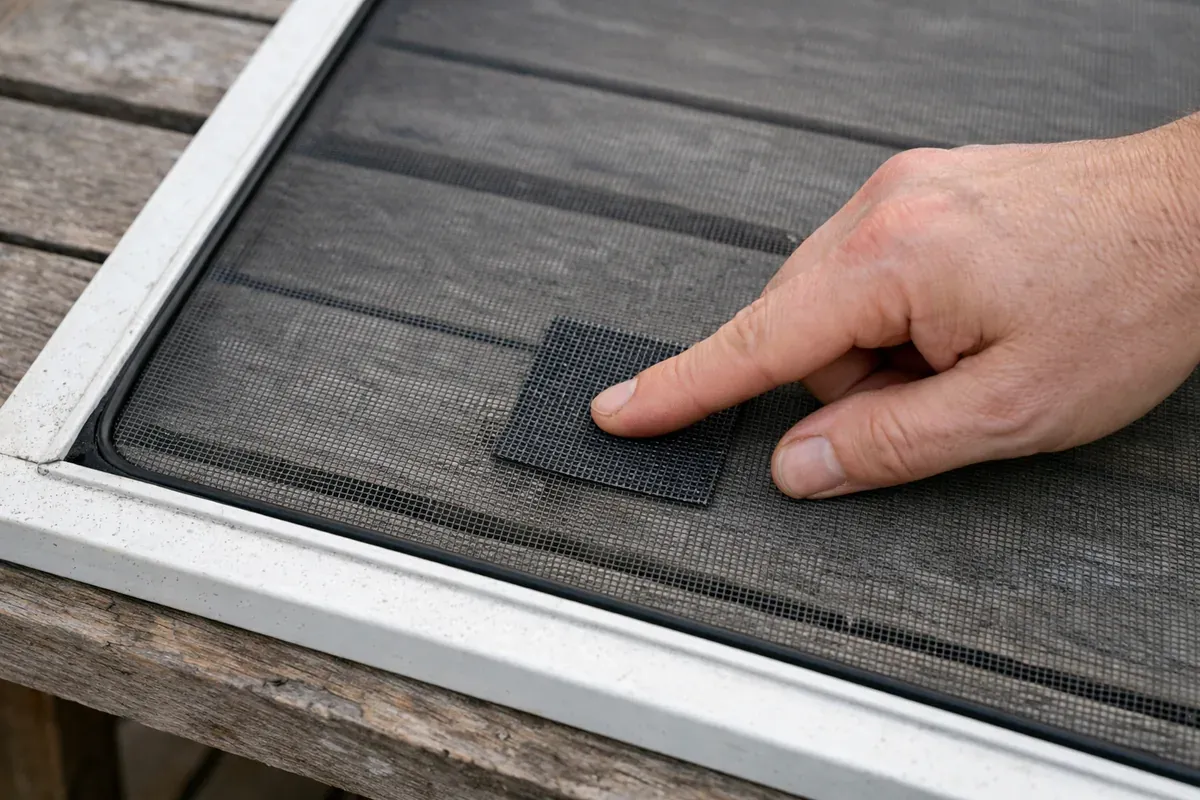
A small hole or tear in a flyscreen can usually be patched in ten minutes with a self-adhesive patch or a strip of flyscreen repair tape. At Bunnings these cost about $4.50 to $10 (checked November 2026). Patch the screen if the mesh is still soft and the damage is small and away from the edges. If the mesh is brittle, torn along the frame or full of holes, a patch won’t hold and the screen needs remeshing.
Your options for a small hole
Which fix suits depends on whether your mesh is fibreglass (soft, folds like cloth) or aluminium (stiffer, holds a crease). Not sure? Our guide to flyscreen mesh types shows the difference.
| Fix | Best for | How visible | Rough cost |
|---|---|---|---|
| Self-adhesive patch | Holes up to the size of the patch, fibreglass or aluminium | Shows as a darker, denser square | About $4.50 to $7 for 3 |
| Flyscreen repair tape | Long thin tears, several small holes | Shows as a darker strip | About $10 for 5 m |
| Heat seal patch | Small holes | Shows as a darker square, flatter than tape | About $6.50 for 3 |
| Stitching or glue | Pinholes and short splits in fibreglass | The least noticeable | A few dollars, or nothing |
| Bent-wire aluminium patch | Small holes in aluminium mesh | Neat if the mesh matches | An offcut of mesh |
What flyscreen repair kits contain and cost
Most “flyscreen repair kits” on Australian hardware shelves are packs of pre-cut adhesive mesh patches or a roll of adhesive mesh tape. You need nothing else but scissors.
What Bunnings listed online in November 2026:
- Permastik 100 x 80 mm adhesive screen patches, 3 pack, about $4.50
- Permastik 200 x 150 mm adhesive screen patches, 3 pack, about $6.78
- Permastik 180 x 130 mm heat seal repair patches, 3 pack, about $6.50
- Permastik 5 m x 50 mm flyscreen repair tape, about $9.98
Mitre 10 and Home Hardware list the Cowdroy range: self-adhesive patches in 100 x 80 mm and 150 x 200 mm packs of three, and a 5 m x 50 mm repair tape. An independent Sydney hardware store listed the larger Cowdroy patch pack at about $11 (checked November 2026). Prices vary by store, so treat these as a guide.
The Bunnings product pages do not say what the patch mesh is made of, its colour or which screens it suits. Cowdroy lists its patches and tape as charcoal. A charcoal patch blends best on charcoal or black mesh and stands out more on silver aluminium.
Hook-on aluminium patches
Ready-made aluminium patches with wire hooks around the edge are sold overseas, but we could not find them on Bunnings, Mitre 10 or Home Hardware’s Australian sites in November 2026. You can make one from an offcut of aluminium mesh (see below); a screen shop may sell you a scrap.
What you need
- A patch, tape, or a scrap of matching mesh
- Sharp scissors (tin snips for aluminium mesh)
- A soft brush, warm soapy water and a cloth
- For heat seal patches: a hairdryer, or whatever heat source the pack says
- For stitching: a large-eyed needle and fine clear fishing line
- Gloves if you are handling aluminium mesh: cut wire ends are sharp
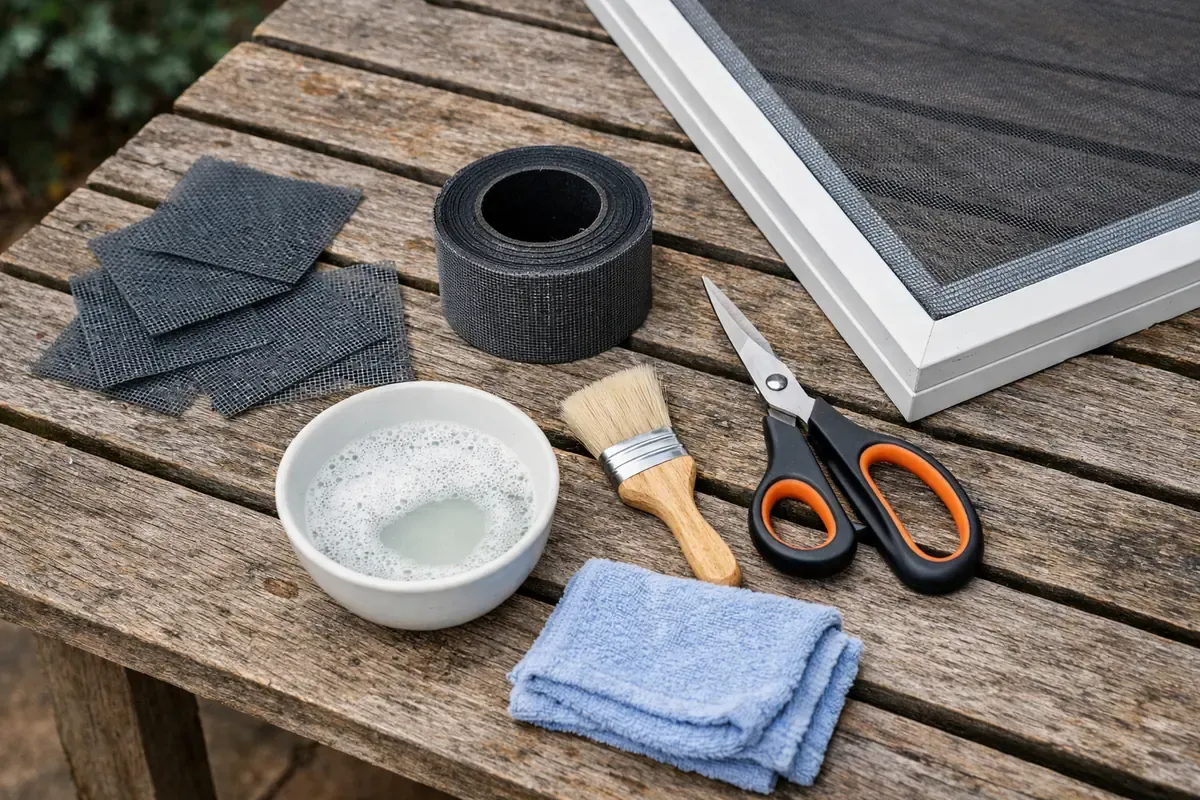
How to patch a flyscreen with an adhesive patch or tape
- Take the screen out if you can and lay it flat on a table. It is easier, gives a neater result and keeps you off a ladder. Our guide on removing a flyscreen without bending it covers each window type. On an upper floor, do not lean out to work on a screen from outside.
- Clean the area. Brush off dust and cobwebs, wipe with warm soapy water and let it dry fully. Adhesive will not grip dusty mesh, and this is the step most people skip.
- Push loose strands back into line so the hole is as flat and small as you can get it.
- Cut the patch so it overlaps sound mesh by a couple of centimetres on every side. A bigger overlap grips better.
- Round the corners with scissors. Square corners catch on hands, pets and cleaning cloths and are the first thing to peel.
- Peel and press the patch on, starting in the middle and smoothing out to the edges. Press firmly with your fingers or the back of a spoon against a hard surface underneath.
- Do both sides if the hole is in a door or a screen that gets bumped. A second patch on the other side sandwiches the mesh and holds far better than one.
For a heat seal patch, cut and place it the same way, then heat it as the pack directs. A product test of the similar ScreenMend patch by Caravan World used a hairdryer and reported the patch still holding after six months. Use only as much heat as the pack says: too much can melt or warp the screen.
How to fix a small tear in fibreglass mesh
For a split or a hole smaller than a fingertip, you can often avoid a patch altogether.
- Lay the screen flat and push the fibres back into their weave.
- Stitch the tear with clear fishing line and a large needle, using a loose zigzag across the split. Do not pull tight or the mesh will pucker.
- Seal the stitching with a thin smear of clear silicone or clear household glue on both sides. Let it dry flat.
For a pinhole, a dab of clear glue on its own may be enough. Test any glue or nail polish on a tiny spot near the frame first, because some can leave a white or shiny mark.
How to patch aluminium mesh with a bent-wire patch
This is the traditional repair for aluminium mesh, described in general how-to guides such as this one from Dummies.
- Trim the hole to a neat square with tin snips so there are no loose wires.
- Cut a square of matching aluminium mesh about 25 mm bigger than the hole on each side.
- Pull out two or three wires along each edge of the patch so a fringe of bare wire ends sticks out.
- Bend the fringe down at a right angle on all four sides.
- Push the wires through the screen around the hole, then fold them flat on the other side. A dab of glue on the folded ends helps them stay put.
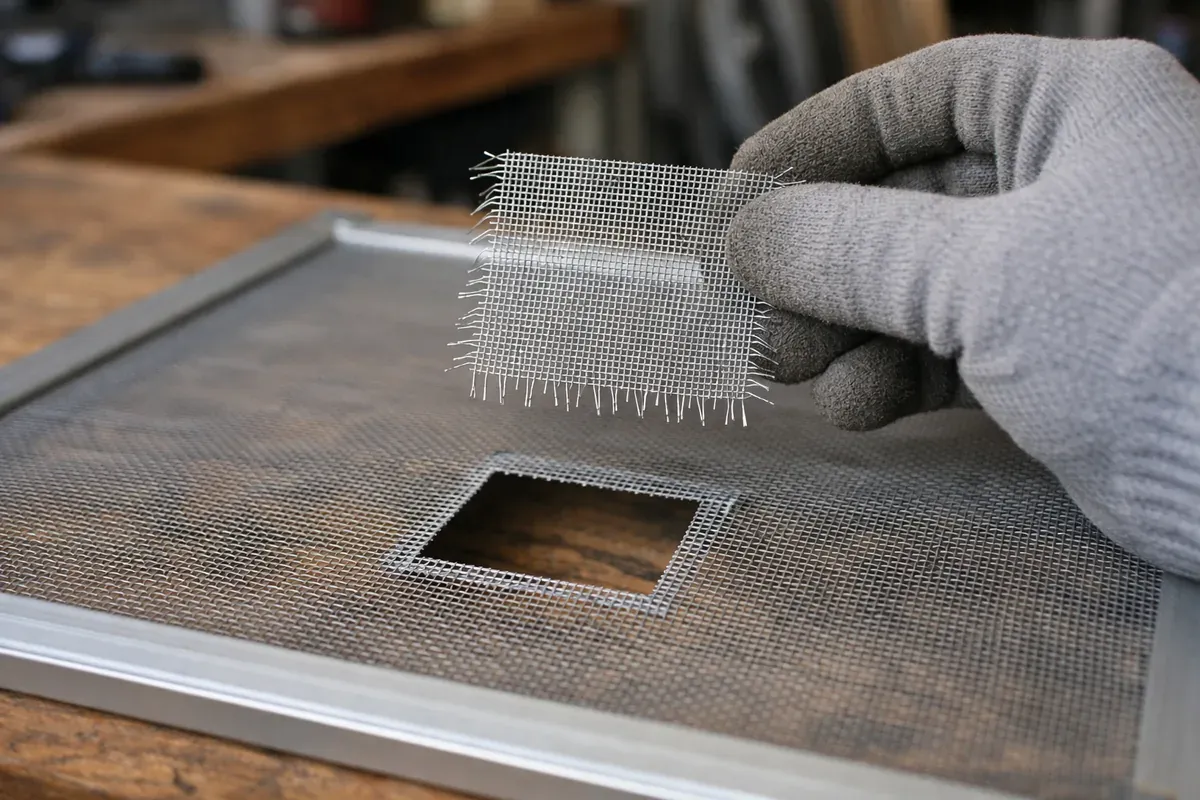
Wear gloves: the cut wire ends are sharp.
How visible is a patch?
Every patch shows. Adhesive patches and tape look like a darker square or strip, because you are looking through two layers of mesh. You will notice it up close from inside; from the street you mostly won’t. Stitching and glue on fibreglass is the least visible fix.
If looks matter (a front window, a house you are selling), one remeshed screen is often a better result than a patch in the middle of it.
When a patch is enough, and when to remesh
A patch is enough when:
- The hole is small (roughly up to the size of the largest patch, 200 x 150 mm) and there are only one or two on the screen.
- The damage is in the middle of the mesh, not at the edge.
- The mesh is still soft and flexible when you press it.
- It is a rental and you need to keep the bugs out until the landlord arranges a repair. If you are renting, check our guide on who pays for flyscreen repairs before you fix anything yourself.
- It is a low-traffic window that nobody touches.
The screen needs remeshing when:
- The mesh is brittle from sun. If it crackles, crumbles or tears when you press it with a finger, the patch will hold and the mesh around it will split.
- The tear runs along the spline, the rubber cord that holds the mesh in the frame. There is nothing for a patch to grip, and the mesh will keep pulling out.
- The hole is large, or there are several. Once a screen needs more than two or three patches, it looks worse than new mesh and the next hole is rarely far away.
- The mesh is sagging or bulging. A patch fixes the hole, not the tension.
- It is a door or a pet scratches it. Patches on high-traffic doors get pushed and peeled. If a dog or cat did it, pet mesh is the longer-term answer.
Remeshing a window screen yourself takes a spline roller, new mesh and spline, and some patience. Fibreglass mesh is about $11 for a 910 mm x 2 m piece at Bunnings (checked November 2026), plus spline. Our step-by-step guide on how to replace flyscreen mesh walks through it.
When to get someone in
Get a screen business to do it if the frame is bent, a corner has come apart, the screen is on an upper floor you cannot safely reach, or you have several screens to do at once. Leave security door mesh to a professional too: it is part of what makes the door secure, so ask the manufacturer or installer about a proper repair rather than patching it.
You can check rough remesh and replacement costs, find a local screen business, or ask for a quote and we will pass your details to a local repairer.
Questions
Does flyscreen repair tape work?
Yes, for small holes and short tears in mesh that is otherwise sound. It is a stopgap more than a permanent fix, and it shows as a darker square on the screen.
Can I patch a flyscreen without taking it out?
Often, yes. Adhesive patches and tape can go on in place if you can reach both sides. Taking the screen out and laying it flat gives a neater, longer lasting result and is safer on upper floors.
Can I patch aluminium flyscreen mesh with adhesive patches?
Adhesive patches will stick to aluminium mesh, but the neater repair for aluminium is a patch cut from scrap aluminium mesh with its edge wires bent through the screen.
How big a hole can you patch?
There is no official limit. As a rule of thumb, holes up to about the size of the patches sold in hardware stores (the largest common size is 200 x 150 mm) are worth patching. Bigger damage, or more than a few patches on one screen, means it is time to remesh.
What glue should I use on a flyscreen tear?
A thin smear of clear silicone or clear household adhesive is a common choice for small splits in fibreglass. Whatever you use, test a tiny spot near the frame first, because some glues can leave a white or stiff mark on the mesh.